

Pergola design styles for Florida sun (and which actually shade you)
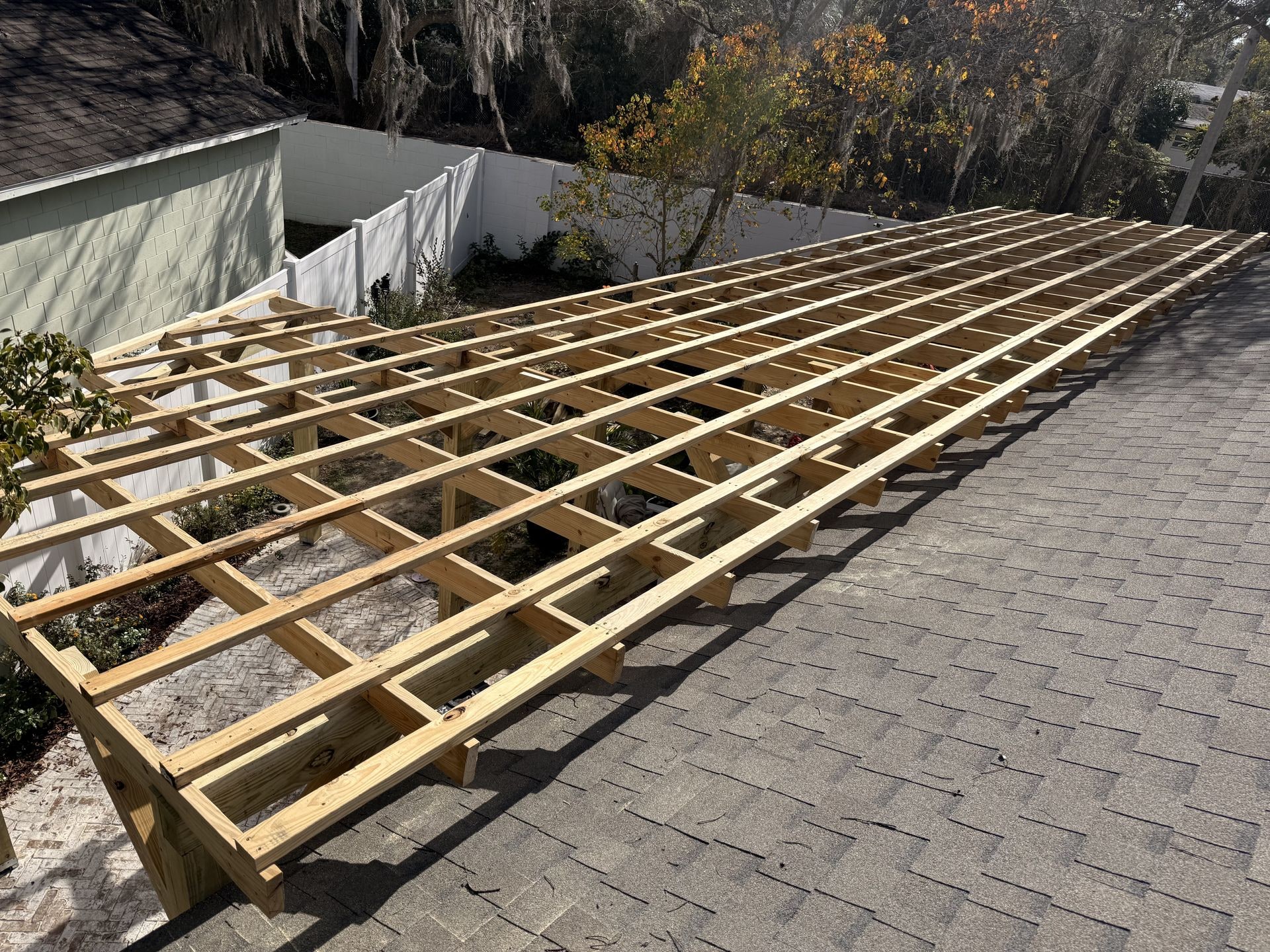
A pergola in a magazine looks fine because the photographer waited until 5 pm. In Orlando, 1 pm is the test. Here is how we design pergolas that actually shade — and which styles only look like they do.
The shade math nobody mentions
Sun angle in Orlando peaks around 84 degrees in June and bottoms around 38 degrees in December. A pergola with open spacing on top shades the ground for about 15 minutes a day in summer — when the sun is directly overhead. The other 11 hours, light comes in at an angle and slips between the beams.
To actually shade, the top either needs to be tight (high coverage), oriented to the sun path (angled slats), or operable (louvers you tilt).
Style 1: Traditional open-top — pretty, not shade
The classic pergola — square posts, beams every 16-24 inches, rafters running perpendicular. Looks great. Casts striped shadows that move with the sun. Shade percentage: ~25%.
Best use: an architectural feature where you actually want dappled light, like over a planter bed or a pathway. Not where you want to sit at noon.
Style 2: Tight-slat pergola — real shade, fixed
Same form factor but slat spacing under 4 inches and slats angled 15-25 degrees against the typical sun path. Shade percentage: 65-80%.
Best use: dining patios where the table sits in one place and you want consistent shade during meal times. Fixed orientation means you commit to one sun direction — we typically angle for 12-3 pm coverage since that is when people actually use the patio.
Style 3: Louvered roof — adjustable, the modern answer
Aluminum or wood louvers that pivot. Open in the morning, close at noon. Open again at 4 pm when you want golden hour to come through. Shade percentage: 5-100% on demand.
Cost is real — a louvered pergola runs 2-3x a traditional one. Worth it if the patio is a daily-use space. We typically pair them with integrated LED + a fan beam so the whole structure is multi-mode (shade + light + air movement).
Style 4: Solid roof + skylight — pergola that lies about being one
Technically not a pergola, but it solves the same problem. A solid roof (matching the house) over the patio, with one or two skylights to keep it from feeling cave-like. Shade percentage: 95%.
You lose the "open-air" feeling but gain a usable outdoor room during summer storms. We build a lot of these for clients who tried a traditional pergola first and gave up on it.
Hurricane considerations
Anything we build in Orlando is engineered to 130 mph wind load minimum — that is the Florida Building Code requirement for our zone. The post sizing, footing depth (24-36 inches with a concrete pier), and hurricane-clip hardware all come out of that number.
Some pre-fab kits sold online are rated for 80 mph. They are illegal to install in Florida. If a contractor offers to assemble one for you, ask for the permit. If they cannot pull one, walk.
Cost ranges (Orlando, 2026)
- Traditional open-top pergola, 12'x14': $6,500-$11,000 in cedar; $9,000-$15,000 in white oak.
- Tight-slat angled, same size: +$2,500-$4,000 over traditional.
- Louvered, same size: $22,000-$38,000 depending on motor + integration.
- Solid roof + skylight, same size: $14,000-$24,000.
Want help picking the right style? Tell us where the patio faces (north / south / east / west), when you actually use it (mornings? evenings?), and what you usually do out there. We will steer you to the version that fits your day.
- #pergolas
- #outdoor-living
- #shade
- #florida
- #design
- #orlando