

Selling Custom Furniture Online: Platforms, Photography, and Client Conversion
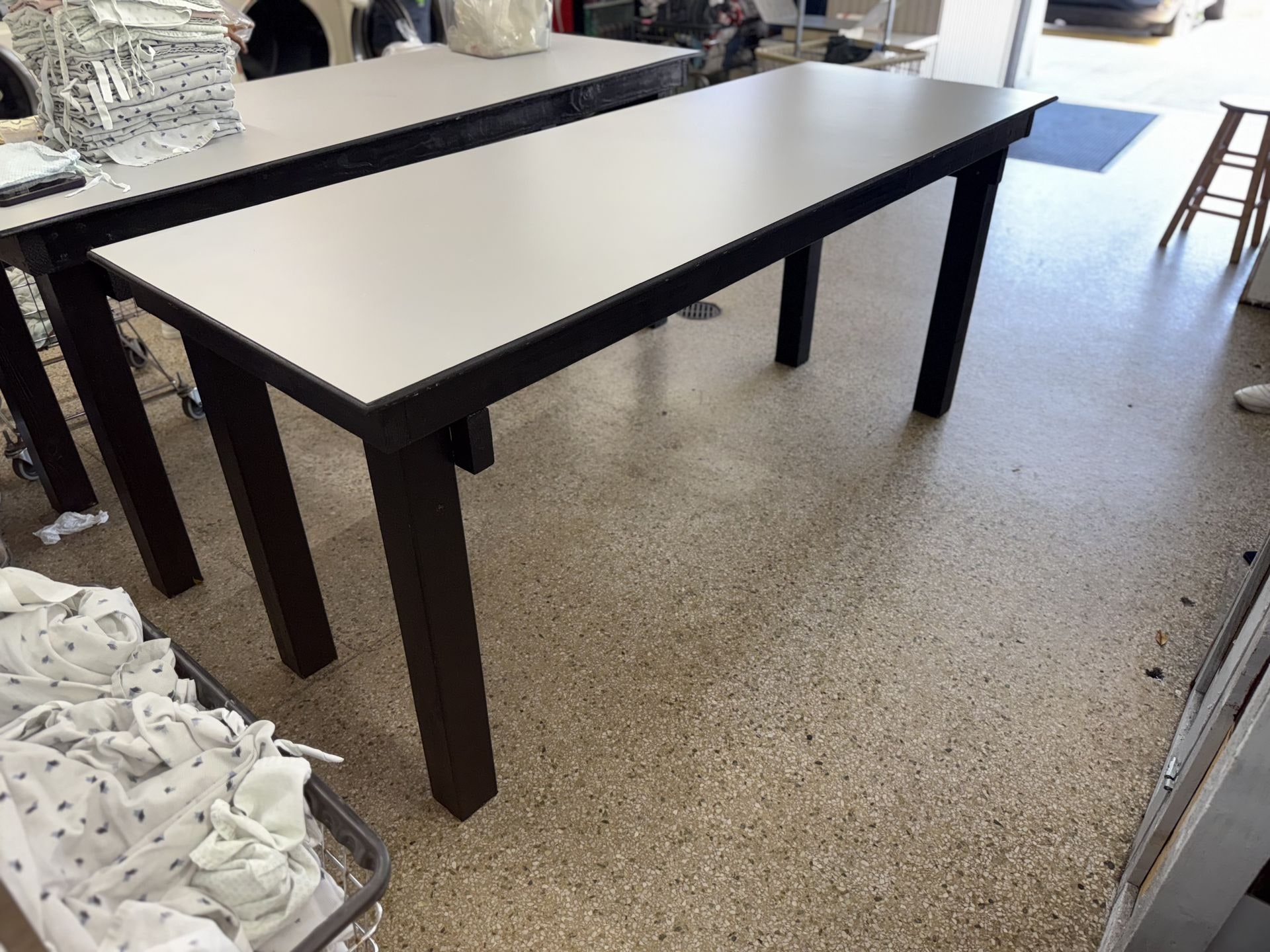
Custom furniture does not sell online the way mass-produced products do. You are not competing on price with Wayfair or on algorithmic convenience with Amazon. You are selling something different: specificity, craftsmanship, a named maker, and a product that is made for the specific buyer. Understanding which channels amplify these advantages — and which channels commoditize you — is the core of a sustainable online sales strategy.
The Platform Landscape in 2026
Etsy: The Volume Lead Generator, Not the Revenue Home
Etsy is where buyers discover custom furniture. It is not where you want most of your revenue to come from.
The fee structure as of 2026: 6.5% transaction fee + 3% + $0.25 payment processing + $0.20 listing fee per item. On a $4,500 dining table, Etsy's cut is approximately $330–$350. That is before advertising (Etsy Offsite Ads automatically charges 12–15% on sales from their ad placements, opted in by default for shops over $10,000 in annual sales).
The real value of Etsy is not the direct sales — it is the discovery. Buyers searching "custom walnut dining table" or "handmade cherry coffee table" find you on Etsy; they convert on your website or direct. Shops that treat Etsy as a marketing channel (and price accordingly, either accepting the fees or directing interested buyers to their website for direct ordering) extract value from the platform without being owned by it.
Etsy strategy:
- List your most visually striking pieces with excellent photography
- In your bio and shop policies, prominently reference your website for custom orders
- Respond to every inquiry within 24 hours — Etsy's algorithm rewards fast response rate
- Do not lower prices to compete with cheaper, lower-quality listings; position on quality and maker story
Instagram: The Portfolio Platform That Still Works
Despite platform evolution, Instagram in 2026 remains the highest-converting social media platform for custom furniture. The visual-first format and short-form video (Reels) allow a maker to demonstrate the build process, the material quality, and the finished piece in a format that educated buyers consume and share.
What performs on Instagram in 2026:
- Process video: 30–90 seconds showing the build from rough lumber to finished piece. These consistently outperform finished-piece photos in reach and saves.
- Before/after reveals: the raw wood versus the finished commissioned piece, especially on figured walnut or live-edge material
- Maker POV content: your hands, your shop, your tools. Buyers purchasing custom furniture are buying the maker as much as the piece.
- Client delivery moments: with permission, the piece in its final installed space
What does not perform:
- Product photos with pure white backgrounds (appropriate for product e-commerce; out of place in the artisan context)
- Purely informational content without visual strength
- Overproduced brand content that removes the maker's presence
Instagram Business Account metrics to track: saves (indicate serious purchase intent), profile visits after posts (interest conversion), and direct messages (most high-value inquiries start in DMs, not the link-in-bio).
The link-in-bio strategy: A single Linktree or direct website link that routes serious inquirers to a consultation form. Instagram is terrible at facilitating transactions; it is excellent at warming up potential buyers before they go elsewhere.
Your Own Website: The Revenue Home
If Instagram is discovery and Etsy is search, your website is where money changes hands. A custom furniture website does not need to be complex — it needs to do three things well:
- Show the work with excellent photography. A portfolio of 8–15 completed pieces, professionally photographed, with brief descriptions of material and process. This is the credibility foundation.
- Capture commission inquiries. A simple consultation form: name, email, piece type (table/cabinet/shelving), approximate budget, timeline, and a free text field for vision description. This screens buyers and starts the conversation on your terms.
- Tell the maker story. One strong "About" page that establishes your background, approach, and location. Buyers purchasing custom furniture want to know who made it. A named, photographed maker with a visible shop and a clear process converts better than an anonymous brand.
Platform options in 2026:
- Squarespace: $16–$23/month. Good portfolio templates, acceptable e-commerce for deposits, easy to maintain without technical skill.
- Showit: $22–$44/month. More design flexibility, excellent for photography-heavy sites, popular with photographers and makers.
- WordPress + Elementor: More flexible, more maintenance, lower cost for technical users ($10–$15/month hosting + $50/year Elementor Pro).
- Custom development: Unnecessary for most custom furniture shops unless integrating complex order management.
Craft Fairs and Markets: The Discovery Channel That Still Converts
High-end craft fairs, design markets, and maker events remain among the highest conversion environments for custom furniture in 2026 — because they allow direct physical interaction with the material and the maker simultaneously. A buyer who sits in a chair you made, runs their hand across a table surface, or looks directly at the joinery from 18 inches will have an experience no photograph can replicate.
Events that deliver: Winter design markets in urban areas (SFMADE Market, Brooklyn Maker Faire, Dallas Holiday Craft Market, Chicago Renegade), NYNOW, and regional artisan markets in high-income suburb markets. Booth fees range from $200 for local markets to $2,000–$4,000 for major design events.
What converts at shows:
- Bringing representative finished pieces, not catalogs or renders
- A sign or printed card with QR code to portfolio and commission inquiry form
- Price cards that show commissioned piece pricing honestly; buyers who balk at $4,500 are not your buyers
- Business cards with website and Instagram
ROI calculation: A $400 booth fee that generates 2 commissions at an average of $3,500 net revenue = 8.75× return. Even a single commission at $3,500 covers 8 booth fees. The question is not whether to attend good markets; it is which markets have the right buyer profile.
Photography: The Single Highest ROI Investment
No marketing investment delivers more return per dollar for a custom furniture business than professional photography. A photo taken on a smartphone in a dark shop with bad white balance sends the signal "hobby project" regardless of the actual quality of the piece. A professional photo in context — the table in a real dining room, the cabinet in an actual kitchen — communicates value immediately.
The minimum viable photography setup:
- One or two large windows as natural light sources (ideal) or continuous LED lighting ($150–$400 for a good kit)
- A neutral, uncluttered background (white wall, light gray wall, or a deliberately styled space)
- Props that suggest use without overwhelming: a linen runner on a table, a few books on a shelf, a plant near a cabinet
- A tripod and remote shutter release to eliminate camera shake
- Shooting in RAW format and processing in Lightroom or Capture One
If DIY photography is not an option: One professional shoot per quarter, 4–6 pieces per shoot, $300–$600 for a capable freelance product photographer. This generates the hero images for website, Instagram, and Etsy. It is a business expense that directly drives revenue.
The context shot vs. the detail shot: Both are necessary. The context shot (piece in a room) converts Instagram browsers and website visitors. The detail shot (joinery close-up, grain close-up, hardware detail) converts buyers who are already interested and evaluating quality. A complete set for each piece: 2–3 context shots, 2–3 detail shots.
Converting Inquiries to Commissions
The conversion process for a custom furniture commission is not a single step — it is a conversation over 1–5 interactions. The makers who convert at the highest rate do several things consistently:
Respond fast. An inquiry not answered within 24 hours loses 40–60% of its conversion probability. Buyers contact multiple makers; whoever responds thoughtfully and quickly establishes the relationship.
Ask the right questions. The three-question intake (roughly: what do you need, where will it live, and what's your budget?) qualifies buyers and gathers the information needed for a real quote. Do not quote without a budget conversation — a buyer with a $1,500 mental ceiling for a piece that starts at $3,500 wastes both parties' time.
Send real quotes with process information. A quote that itemizes material species, dimensions, finish, lead time, payment terms, and a warranty statement communicates professionalism. A quote that is just a dollar number communicates nothing.
Deposit structure: 50% deposit at contract signing, 50% at delivery is standard. The deposit funds materials; it is a reasonable ask that does not frighten committed buyers and screens out tire-kickers.
The follow-up. If an interested buyer goes quiet after receiving a quote, one polite follow-up at 7 days ("Following up to see if you have questions about the proposal") recovers roughly 20% of quotes that would otherwise go cold.
The Direct Client Flywheel
The long-term goal of any custom furniture marketing strategy is creating clients who return and refer. A client who receives a piece they love, installed in their home, with a follow-up note and care instructions, becomes a referral source. Word-of-mouth referrals in the custom furniture market carry the highest conversion rate and the most favorable price sensitivity of any lead source — they arrive pre-sold on quality and pre-briefed on price range by the referring friend.
Building this flywheel: deliver great work, follow up personally, ask satisfied clients directly if they know anyone who might want similar work, and make referring easy with a business card or follow-up email they can forward.
References: Etsy Inc., Seller Fee Structure (2026). Instagram for Business, Creator Economy Report (2025). Squarespace and Showit published pricing (2026). Craft Industry Alliance, Craft Show Seller Survey (2024). Fine Woodworking, "Marketing the Custom Shop," issue #290 (2022). Woodworkers Guild of America, Business of Woodworking Survey (2024).
- #selling
- #ecommerce
- #etsy
- #marketing
- #custom-furniture-business
- #photography
- #client-conversion