

Woodworking workbench design: the decisions that matter before you start building
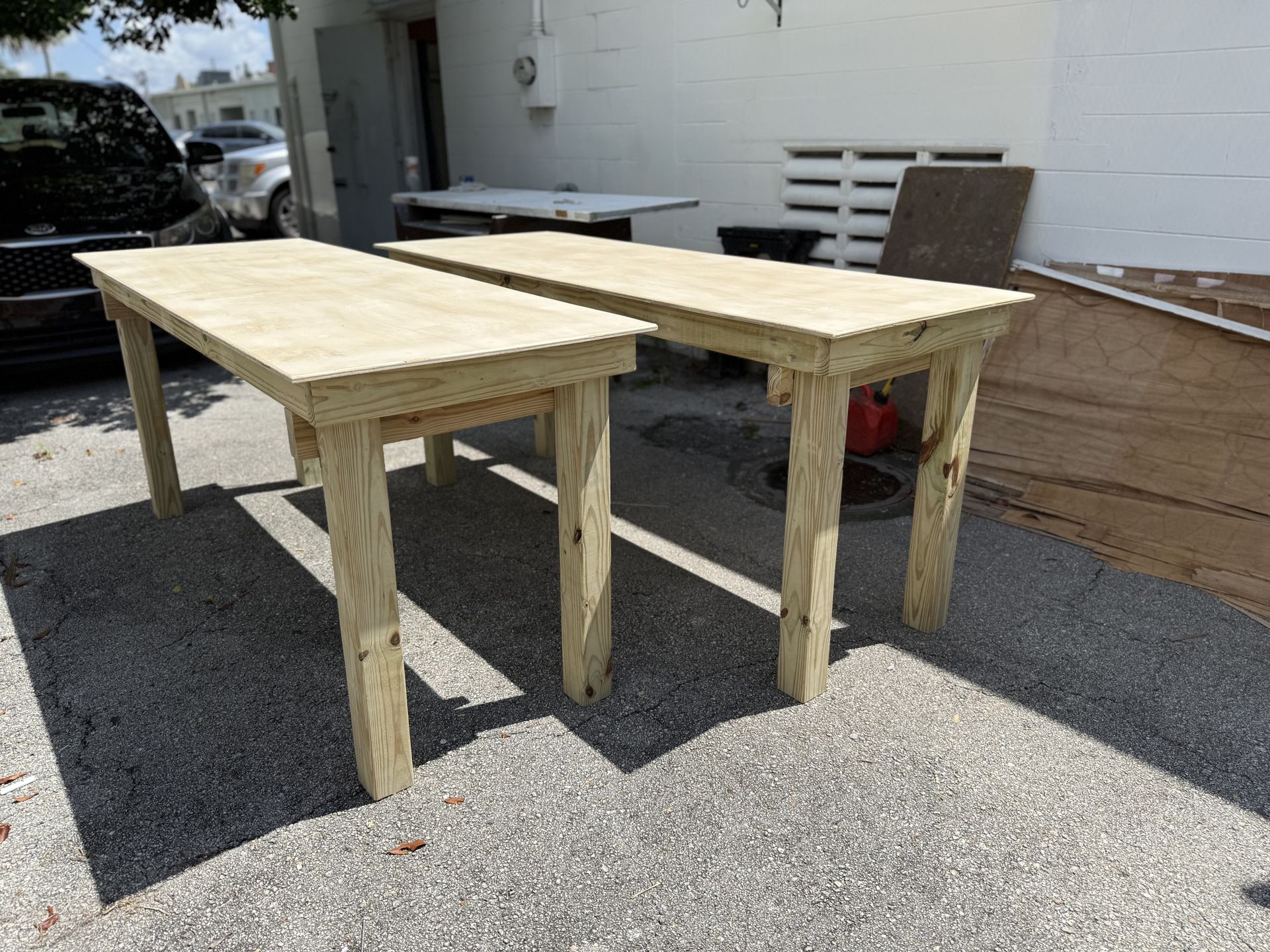
The workbench is the piece of furniture most woodworkers build and the one they think about least carefully before starting. It is built early, when skills are still developing and the full scope of future work is unknown, which is exactly the wrong time to make decisions that will affect every hour spent in the shop for the next decade.
Here is what the design decisions actually turn on.
Height: the most personal spec in the shop
Workbench height is a function of your height, the work you do, and the tools you prefer. There is no universal correct height.
The classical guidance: stand with your arm at your side, make a fist, and the height of your knuckles is the correct bench height. This is true for hand-plane work — planing is a pushing motion that generates force from the hips and core, and a bench that is too high puts the work above the center of force, wasting effort. For most woodworkers this produces a bench between 32 and 36 inches.
The exception: bench work that involves sawing, chiseling, or detail carving benefits from a higher bench — one that brings the work closer to eye level and reduces hunching. A secondary bench or a tool chest that can raise the height of a specific workpiece is more flexible than a single bench at the "correct" height for everything.
If you do primarily machine work (you set up cuts at machines and the bench is just an assembly surface), height matters less — the critical spec is flatness, not height, and standard table height (30 inches) is fine. If you do substantial hand-tool work, optimize for that.
Top construction: the flatness vs. mass trade-off
Laminated hardwood top (typically hard maple or beech in 2 to 4-inch-wide strips, glued face-to-face): the standard construction for a furniture shop workbench. Produces a top that is heavy, stable, self-renewing (can be surfaced when worn), and capable of supporting a tail vise. The mass damps vibration from hand tools, which improves cut quality. A 4-inch thick laminated maple top for a 96-inch bench weighs 150–200 lbs; this is a feature, not a problem.
The flatness of a laminated top depends on the accuracy of the glue-up. Tops built with consistent-width strips, glued under full clamping pressure with registration to a flat reference surface, come off the assembly within 1/16 inch of flat and are surfaced with a hand plane or router sled before use. Tops glued carelessly can be significantly worse.
Torsion box top: a lightweight alternative using a rigid frame (honeycomb or grid of MDF or plywood ribs) sandwiched between top and bottom skins. Significantly lighter than a solid laminated top (40–60 lbs versus 150–200 lbs), potentially very flat if built carefully, but cannot be resurfaced when worn and does not accept dog holes or vise hardware the same way solid tops do. Appropriate for assembly tables and secondary benches; not the right choice for a primary hand-tool bench.
Butcher block top: commercial butcher block (end-grain or edge-grain) is available in standard sizes and can be installed on a custom base. It is faster than building a top from scratch and, for edge-grain butcher block, nearly as functional. The quality varies significantly by manufacturer — Boos and Centerline are consistently high-quality; generic commercial butcher block is not consistent. Check flatness before purchasing.
Dog holes and vise integration
Bench dog holes are circular or square holes in the benchtop and in the tail vise jaw, spaced at regular intervals (typically 3 to 4 inches), that accept bench dogs — pegs that project above the surface to hold work flat for face planing.
If you plan to do substantial face planing by hand or any surface work that requires holding work flat, dog holes and a tail vise (or end vise) are essential design elements — they need to be designed into the bench before building, not retrofitted afterward. The dog hole layout determines the face-clamping capacity of the bench.
If you work primarily with power tools and use the bench as an assembly surface, dog holes are still useful for hold-down clamps (Veritas Hold-Downs, Lee Valley-pattern hold-downs) but less critical as a system.
Base construction: rigidity over elegance
The base of a workbench needs to be rigid — no racking, no twist — because any racking in the base translates into movement in the top during heavy planing. The traditional Roubo base (four legs, heavy stretchers, mortise-and-tenon joinery) is overbuilt to the point where rigidity is not an issue.
The pitfall in modern workbench design is designing for elegance and underbuilding the base. Open bases with thin legs and minimal stretchers look cleaner but require careful joinery and often fail in rigidity. The design should prioritize rigidity; if elegance is also achievable, great.
For a laminated hardwood top at 150+ lbs, the base needs to be anchored to the wall or floor or braced with a lower shelf (a heavy panel beneath the base that ties the legs together and adds lateral resistance). A freestanding bench with a heavy top can walk toward you during heavy planing; anchoring it prevents this.
The Roubo vs. split-top debate
Two bench designs dominate current furniture-maker discussions: the Roubo and the split-top Roubo.
Classic Roubo: a single continuous top, typically 3.5 to 4.5 inches thick, 20–22 inches deep, with a face vise on the left and a tail vise on the right. This is the traditional European cabinetmaker's bench and the design that Chris Schwarz's "The Anarchist's Workbench" has made widely accessible. It is well-designed, proven over centuries, and appropriate for furniture work.
Split-top Roubo: two parallel tops with a gap between them (typically 4–6 inches), usually with no tail vise but with a row of dog holes in the front top. The gap serves as a tool tray for hand tools in current use and allows clamps to reach through the bench top from below. It is a recent innovation (popularized by Benchcrafted) that solves some specific problems: no tail vise to maintain, easy tool access during work, and clamping flexibility. The gap complicates face planing of wide boards that span both tops.
The right choice depends on your work style. If you do heavy hand planing of wide stock, the continuous top is better (no gap to negotiate). If you do more assembly work and want tool access and clamping flexibility, the split top is worth the trade-off.
Drawers, shelves, and tool storage
The bench is the most-used surface in the shop; tool storage integrated into the bench puts the most-used tools within arm's reach without walking to the tool chest. However, drawers and shelves add complexity to the base construction and — if the bench will be moved — add to an already substantial weight.
The practical compromise: a lower shelf (a heavy plywood panel between the lower stretchers) provides tool storage and adds rigidity simultaneously. Drawers under the bench are an upgrade for shops where the bench position is permanent.
Wall-mounted tool storage (French cleats, tool chests adjacent to the bench) is more flexible and generally faster to access than under-bench storage. Prioritize rigidity and flatness in the bench design; tool storage can be refined over time.
What we built at JB Woodworks
Our primary bench is a Roubo-pattern laminated hard maple top, 96 by 22 inches, 4 inches thick, on a mortise-and-tenon base of 8/4 hard maple. Height is 34 inches (optimized for the primary user at 5'11''). Face vise left, tail vise right, 3/4-inch round dog holes at 4-inch spacing across the top and through the tail vise jaw. Lower shelf of 3/4-inch Baltic birch.
What we would change: the lower shelf is below the reach of a seated operator (we do some carving and chip-carving work seated) and could have been positioned 4 inches higher. The dog hole spacing of 4 inches works for most work but occasionally a spacing of 3 inches would be useful.
The bench was built in 2021 and has not been touched structurally since. The top is surfaced annually with a hand plane (less than 30 minutes) and remains within 1/32 inch of flat. Total cost of materials: approximately $400 in maple lumber and hardware. Time to build: two weekends, working alone.
A well-designed bench is the best investment in shop capability per dollar of any tool or machine. Plan it carefully before you cut the first board.
- #workbench
- #workbench-design
- #bench-building
- #shop-setup
- #hand-tools